
Prototype PUF sandwich panels · The motion explainer
Two panels. Same batch. One is hiding something.
They come off the same line minutes apart and look identical. One has an air pocket inside its foam. Watch both from the chemical drum to the cold room, and see where a thermal camera on the line changes the ending.
Prefer it another way? The illustrated story · The full engineering case study



Hi, I'm Kelvin, the line's thermal camera. I look at every panel while it's still warm.
Same drums, same coils, same press.
A PUF panel is foam poured between two steel skins. The foam is two liquids, polyol and isocyanate, plus a blowing agent that puffs it up. The skins unroll from two steel coils. Both of our panels were made from exactly these.

Every lot is lab-tested before it's allowed near the line.
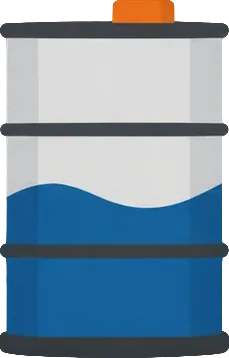 PolyolPart A of the foam
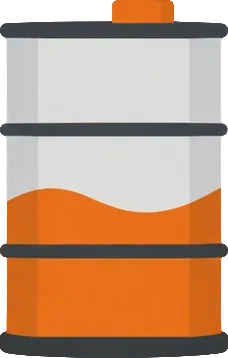 IsocyanatePart B of the foam
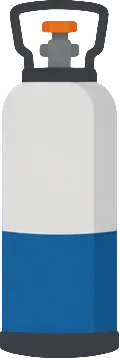 Blowing agentPuffs the foam up
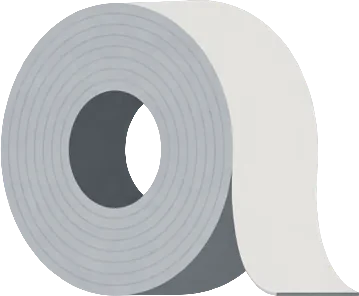 Painted coilThe top skin
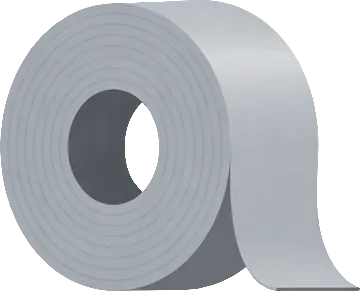 Galvanised coilThe bottom skin
Gate 1: every lot tested



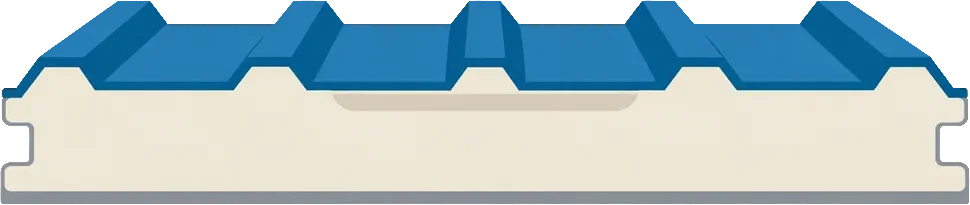
- Top skin profiled steel
- Core PUF foam
- Bottom skin steel
Then one line puts them together, without stopping
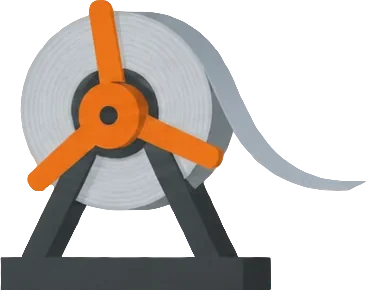
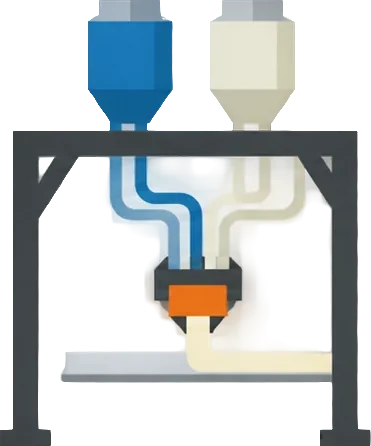
- Coil
- Foam pour
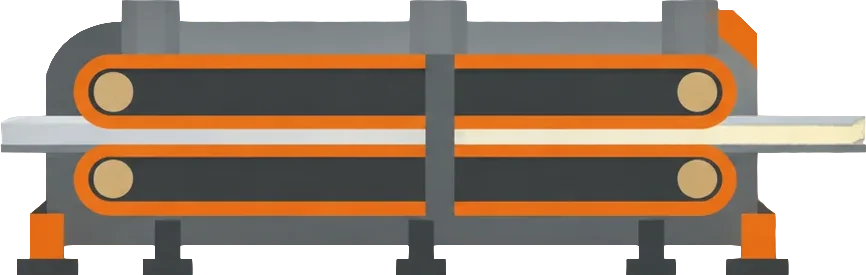
- Double-belt press

 Hold
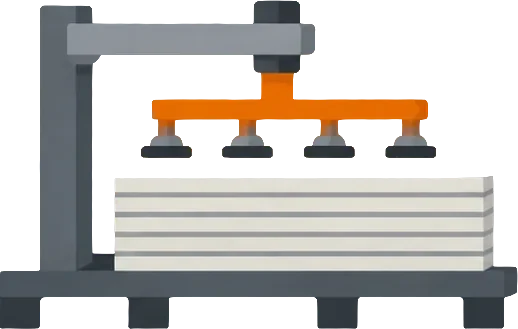
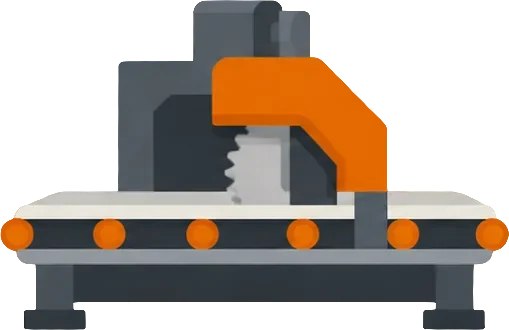
- Saw
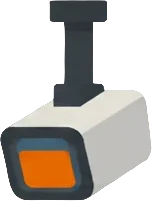
- Thermal camera
- Stack
Mixed warmBoth liquids are kept at their set temperature. Too cold, and the foam doesn't reach every corner.
Pressed at 40 to 45 °CThe foam rises and sets between two moving belts, gluing itself to both skins.
Cut to lengthA few minutes from pour to saw. Then the panel is stacked, wrapped and sent out.
One of them has a pocket of air where foam should be.
For twenty minutes the isocyanate ran a few degrees cold. Cold foam doesn't fill the corners, so it left an air pocket just under the skin. From outside the panel is perfect. A tap test on one panel in twenty would almost certainly miss it.
Setting foam is warm. An air pocket isn't, so I see it as a cold patch.
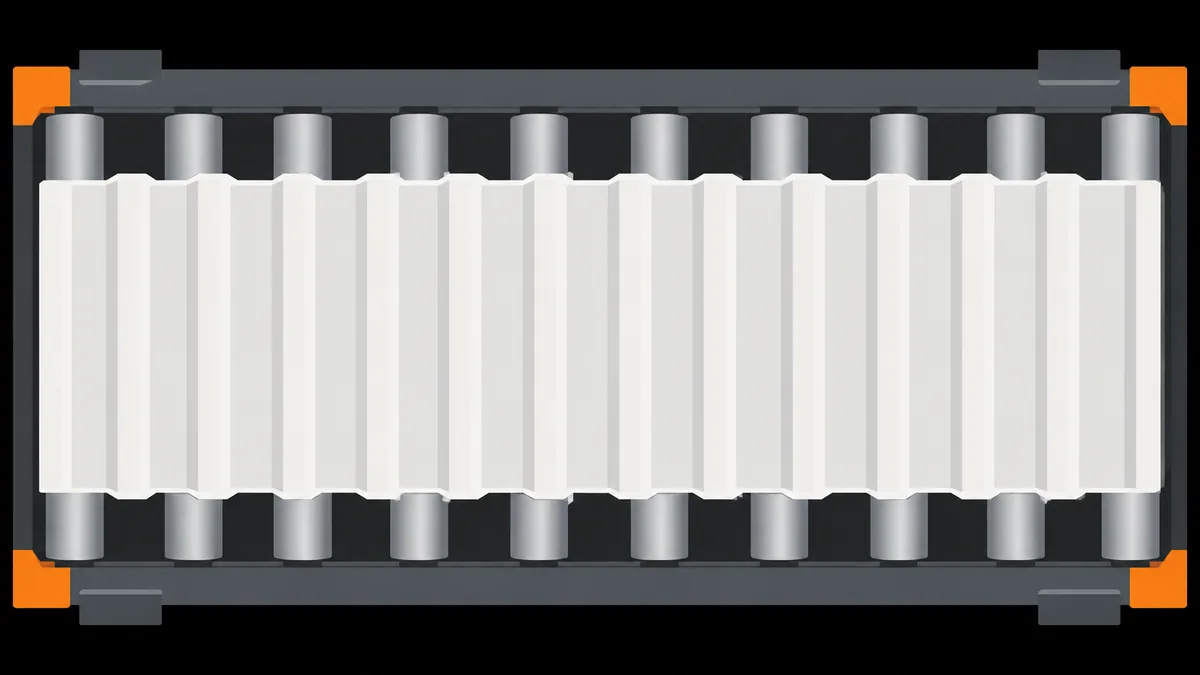
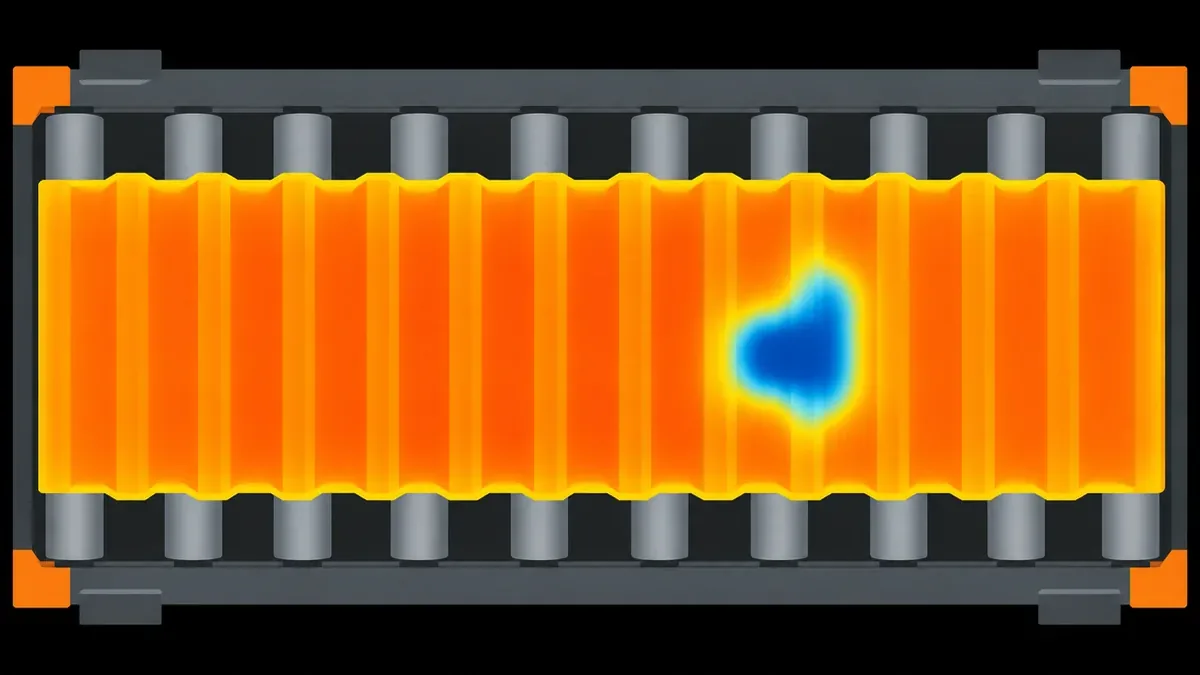
AI-drawn illustrations, not photos or real thermal images from a plant.
What happens next depends on who sees it first.
Same panel, same pocket. Pick an ending.
-
It leaves the plant
It looks just like every other panel on the truck.
Cost so far: nothing -
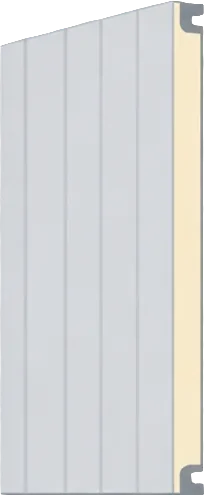
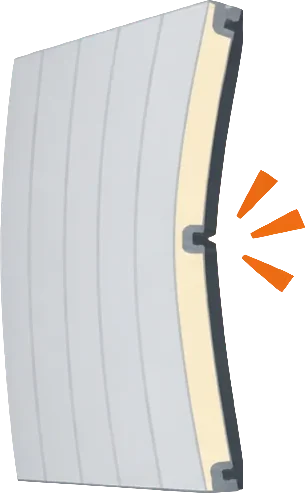

It bows on site
The skin lifts over the pocket and the joint won't close. A crew pulls it out again.
A panel, a truck and a crew -
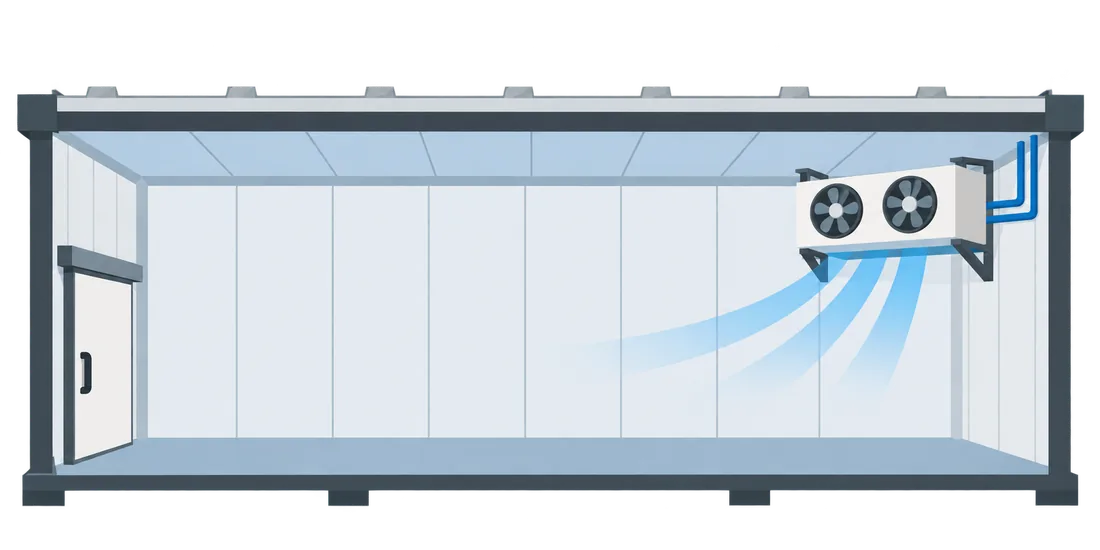


Or it ices up later
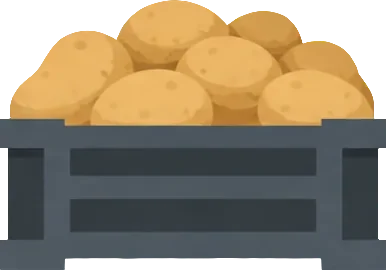
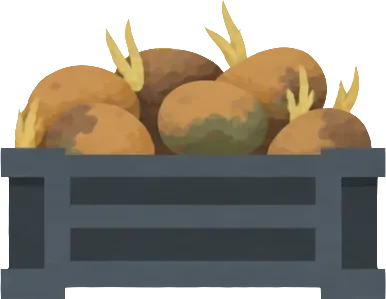
If nobody spots it on site, warm air leaks in and freezes inside the wall. The potatoes beside it go bad first.
Power, produce and repairs -
 Which batch was it?
The phone call
Nobody can say which batch it came from, so now the client checks every load.
A client's trust
One hidden pocket, found weeks later and miles away, by the person who paid for it.
-
Hold lane
Seen at the line
Minutes after the press, the camera sees a cold patch. The panel goes to the hold lane.
Cost: one tap test -
 Panel heldCold patch near the joint. Likely cause: isocyanate running cold.
The supervisor knows why
A message names the panel and the likely cause, the cold isocyanate. It's fixed before more bad panels are made.
Fixed in minutes -
 Panel recordFoam lots: passed · Coils: passed · Thermal scan: clear
Good panels carry proof
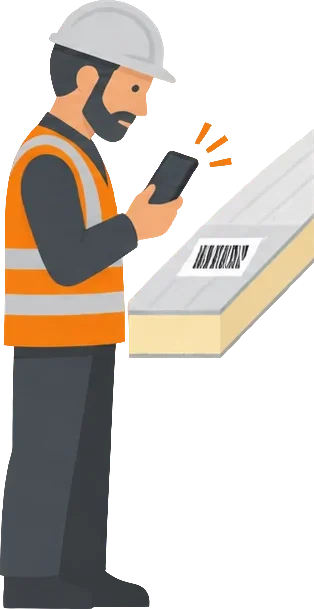
Every panel leaves with a label. The contractor scans it and sees what was checked.
No surprises on site -

 3 °C
A store that stays cold
An even 3 °C, wall to wall. Lower power bills and fresh potatoes.
A client who orders again

Same pocket, found at the line minutes after it was made, for the price of a tap test.
Every room asks something different of the same panel.
Tap the dots to see what a hidden fault does in each room.
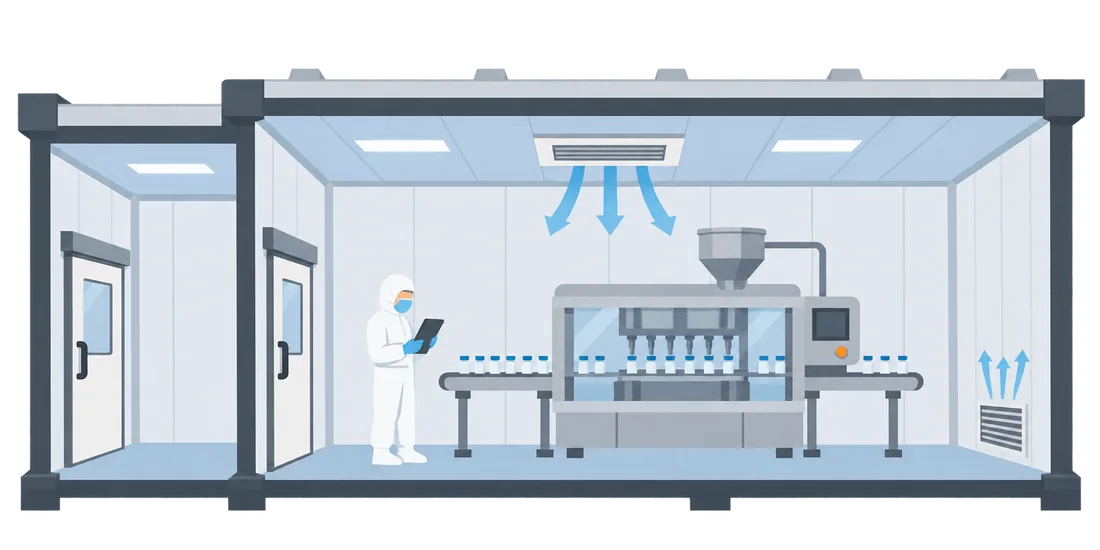
Pharma sterile filling suite
- Walls and joints must seal, or the cleanest room can't hold its air pressure.
- A void behind the skin dents when a trolley hits it. Cracked coating gives microbes a place to hide.
- Auditors ask what's inside the walls and ceiling. A record per panel answers in minutes.
Rooms that hold pressure and pass particle tests first time.
Farm cold store at 3 °C
- A joint that opens in the cold lets warm air in, and frost builds around it.
- Damp gets into a void and freezes. That wall insulates a little worse every year.
- Potatoes stacked against a warm patch sprout or rot first.
An even 3 °C wall to wall, and lower power bills.
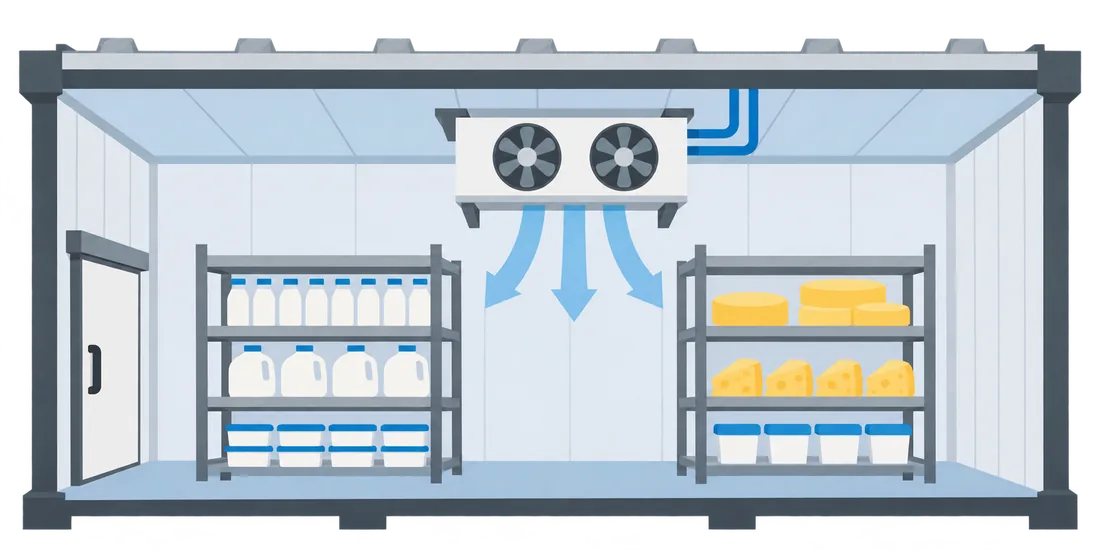
Dairy cold room at 2 °C
- Damp air from wash-downs pushes into any void and freezes there.
- Ice on a ceiling joint melts during defrost and drips onto open product.
- The panel record shows which panels sit over the product zones, so the right ones get replaced.
Dry ceilings and clean food-safety audits.
Typical problems in each kind of room. Results depend on the site; a pilot measures panels at the plant.
Not a dashboard nobody opens. A message, a record, a report.
Each output goes to the one person who acts on it, where they already are.
When I hold a panel, a person hears about it within two minutes.
Line 1 · QC
Panel 1,284 held. Cold patch about 40 × 25 cm, 30 cm from the joint edge.
2nd cold patch in 6 panels. Isocyanate at 19 °C, set point 22 °C, since 2:09 pm.
→ Check the iso heater.
→ Tap-test panels 1,280 to 1,285.
- Panel
- PUF wall panel, 80 mm, 0.5 / 0.5 mm PPGI
- Thermal
- Even, no cold patch
- Skin
- No dents or scratches
- Size
- 6,000 mm long, 80.4 mm thick
- Foam batch
- 40 kg/m³ (lab test, batch 2611-07)
Thermal image and both faces attached
Shift B report13 Nov · 2 pm to 10 pm
- Made
- 4122,470 m²
- Held
- 97 real, 2 false
- Alert
- 1:40median, min:sec
What caused the holds
Sample outputs from the prototype, with made-up panel numbers.
Put in your line's numbers. See the money.
Every number here is an assumption, filled with typical values. Change any of them. The sum is shown in full under the result, so you can check it.
Six weeks, one line. Targets agreed before we start.
The pilot runs beside your current QC, not instead of it. Every hold gets a tap test or a cut sample, so the numbers are checked, not claimed.

Week 1
Sit on the line. Log faults the way your team finds them today. That's the baseline.
Weeks 2 to 3
Fit the cameras and sensors in a planned stop. Record every panel without flagging anything.

Week 4
Train on your panels. Tune it until false alarms are rare enough to trust.

Weeks 5 to 6
Run live, side by side with your QC. Count what each one caught.
Results: published on this page when the first pilot ends, whatever they are.
Drawn once as a kit, then moved in code.
No animator and no video file. An image model drew 18 pictures from short briefs, most of them kit sheets: machines, people and props, each piece on a see-through background, plus the rooms and a thermal pair. Code cut every sheet into its pieces and put each scene together from them, so the same truck, panel and camera turn up wherever the story needs them, and everything you see moving is the page itself.
- One lookA single line on the style, added to every brief:
Series look: flat 2D vector, like a modern motion-graphics explainer for an industrial company. Side-on views. Flat colour, crisp geometric shapes, no outlines, no texture. Charcoal, steel greys and off-white, a cool blue for cold, one signal orange for heat and alerts. No text, numbers or logos.
- Kits firstThe line's machines were drawn first. Every other sheet was briefed with that one attached, so all of them match.
- Draw and saveChatGPT's image model in one project; each sheet downloaded from its viewer at full size.
- CutEach sheet split into its separate pieces by shape: a wheel, a saw blade, a crate, a person.
- AnimatePieces placed and moved with CSS: the coil turns, foam pours, wheels spin, frost grows. Light, sharp, and it pauses when you ask.
The line's machines
The first sheet set the look for everything else. Each machine is a separate piece, with the moving bits (coil, saw blade, camera) drawn on their own so code can turn, dip and aim them.
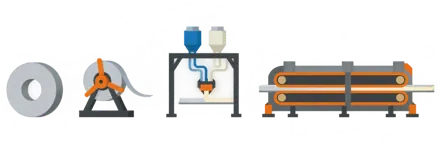
The first machines of a continuous PUF sandwich-panel line, as an animation kit: each piece drawn on its own, in one row with wide empty gaps so none touch: a steel coil (just the round coil), the uncoiler stand that holds it, the foam mixing and pour head on its frame with its hoses, and the long double-belt press. Transparent background, wide landscape.The style sheet: drawn first, then attached to the first brief of every other sheet. The coil turns over its stand on the page.
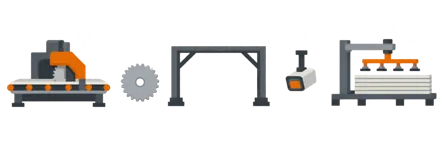
Same look and scale, the rest of the line as separate pieces in one row with wide gaps: the cross-cut saw unit, its round saw blade on its own, a gantry that spans the conveyor, the thermal camera that hangs from it (on its own), and a panel stacker. A real transparent background (alpha), not a painted checkerboard. Wide landscape.Cut into five pieces; the blade spins, and the camera hangs from the gantry over the passing panels.
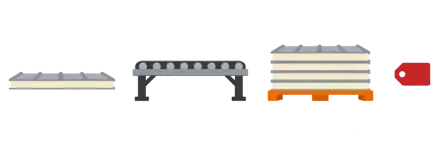
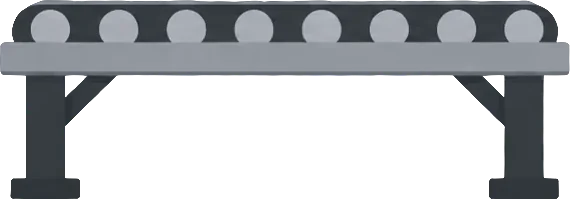
Same look and scale. Separate pieces in one row with wide gaps, none resting on another: one finished sandwich panel on its own (no conveyor under it), seen side-on as it lies flat; a straight section of roller conveyor; a stack of finished panels on a pallet; and a small red reject tag. A real transparent background (alpha), not a painted checkerboard. Wide landscape.The panel that moves along the line, in the hero and in chapter 3.
The people, and Kelvin
A neutral cast sheet first, then the same people in the poses the story needs, then Kelvin, all in one chat so the designs hold.

In the look of the attached image, design the cast of the story as a character sheet, each person standing on their own with wide gaps, full body, facing right: a panel-factory owner, a shift supervisor (a woman), a line worker in overalls and a hard hat, a building contractor in a hi-vis vest, a potato farmer, and a pharma quality manager in a cleanroom gown. Transparent background, wide landscape.Cut into 6 pieces.
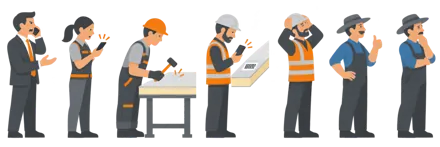
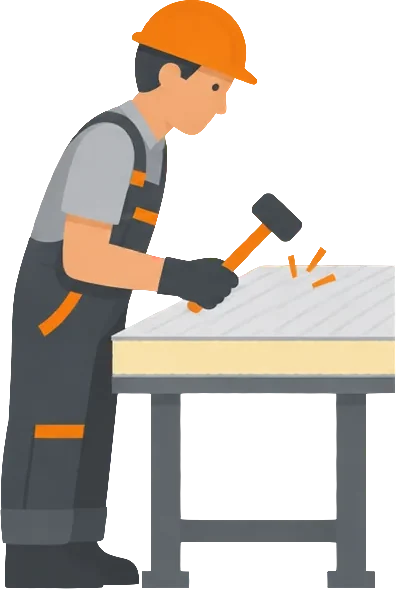
The same people, same designs, in new poses, each separate with wide gaps: the owner on the phone, upset; the supervisor reading an alert on her phone; the line worker tap-testing a panel with a small hammer; the contractor scanning a label with his phone; the contractor frustrated, hands on his head; the farmer happy; the farmer worried. Transparent background, wide landscape.Cut into 7 pieces.

One more character in the same look: Kelvin, a small friendly thermal camera on a tripod who guides the story. Four poses in a row with wide gaps: waving hello, scanning downward, raising the alarm, and pleased. Transparent background, wide landscape.Cut into four poses.
Props
Materials, the panel taken apart, the hidden pocket, the truck with its wheels apart.
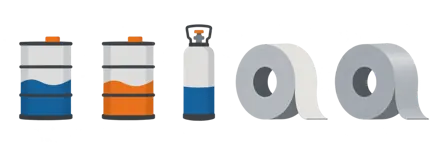
In the look of the attached image, the raw materials of a PUF sandwich panel, each separate with wide gaps: a drum of polyol, a drum of isocyanate, a blowing-agent cylinder, a coil of pre-painted steel and a coil of galvanised steel. Transparent background, wide landscape.Cut into 5 pieces.
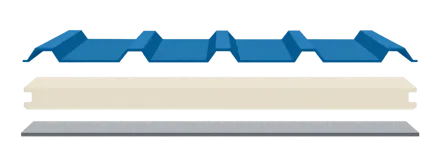
Same look. A sandwich panel taken apart, seen from its end so the profile shows: the profiled steel top skin, the foam core and the flat steel bottom skin, one above another with clear empty gaps between them. Transparent background.Cut into three layers that close up as you scroll.
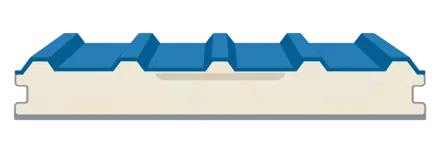
Same look. The same panel sawn through and seen from the cut end: steel skins top and bottom, foam between them, and a hidden air pocket in the foam just under the top skin. Transparent background, landscape.
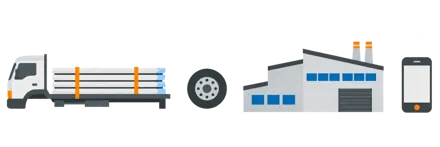
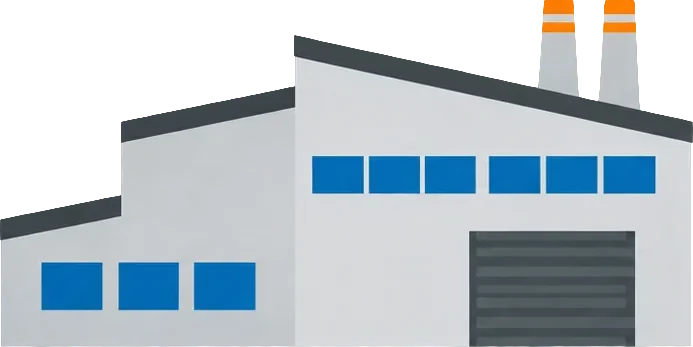
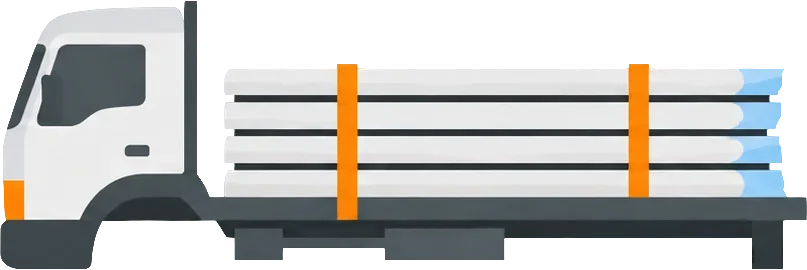
Same look, separate pieces with wide gaps: a flatbed truck seen side-on, loaded with a stack of sandwich panels, drawn without its wheels; one truck wheel on its own so it can spin; the panel factory building seen from the side; and a smartphone. A real transparent background (alpha), not a painted checkerboard. Wide landscape.Cut into four; the truck drives on three copies of one wheel, spinning.
Places
Rooms drawn as side-on cutaways in the same look. The cold store was asked for empty, so the same room can ice up in one ending and stay clean in the other.
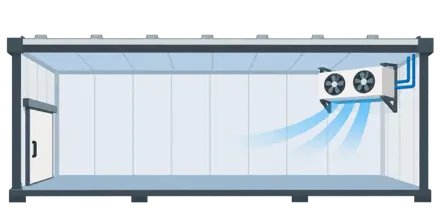
In the look of the attached image, a potato cold store as a side-on cutaway: walls and ceiling of insulated panels, a cooling unit high on one wall, and an empty floor where I will place crates. Transparent background, wide landscape.Left empty on purpose: crates, frost and icicles are placed over it in code.
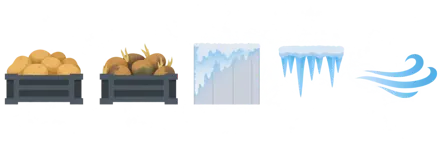
Same look, separate pieces with wide gaps: a crate of fresh potatoes, the same crate with sprouting, rotting potatoes, a patch of ice and frost that could lie over one wall panel, a row of icicles, and a puff of cold air. Transparent background, wide landscape.Cut into five; the frost and icicles grow and the crate rots in road A.
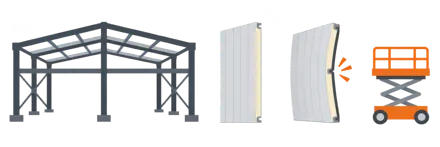
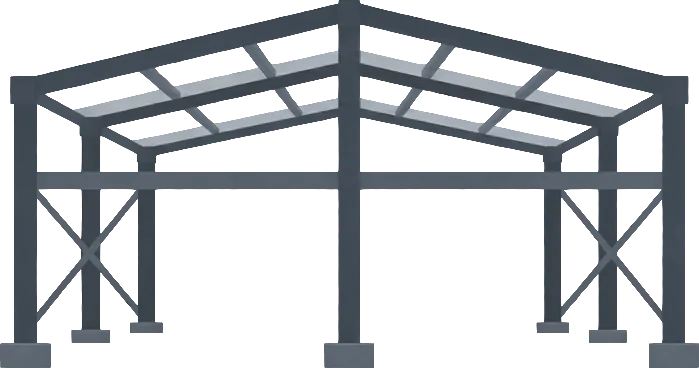
Same look, separate pieces with wide gaps: the steel frame of a building under construction seen side-on, one upright wall panel, the same wall panel bowed outwards with its joint open, and a small scissor lift. Transparent background, wide landscape.Cut into 4 pieces.
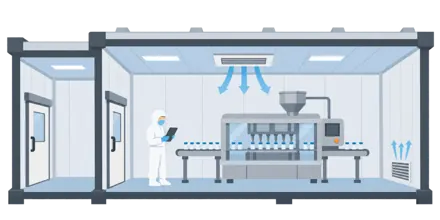
Same look: a side-on cutaway of a pharmaceutical sterile filling room built from insulated wall and ceiling panels, with its airlock and a filling machine. Transparent background, landscape.
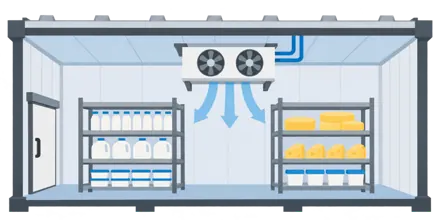
Same look: a side-on cutaway of a dairy cold room built from insulated panels, with milk products on racks and a cooling unit on the ceiling. Transparent background, landscape.
The thermal pair and the icons
A plain panel, then the same picture as a thermal camera sees it; and four icons for the pilot plan.
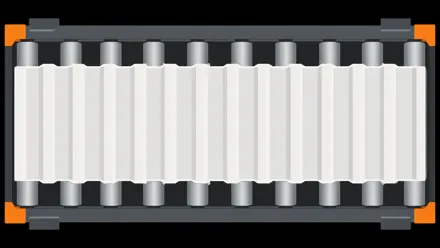
In the look of the attached image: a freshly made sandwich panel on conveyor rollers, seen from directly above, filling the frame. Nothing looks wrong with it. Landscape.
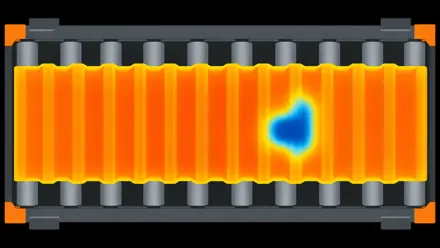
Now exactly the same picture, same framing, as a thermal camera would see it: the warm panel glowing, with one cold patch where foam is missing. Landscape. No scale bar.An edit of the picture before it, so the two line up for the drag-to-compare.

In the look of the attached image, four icons for a six-week factory pilot, in one row with wide gaps: watch and record, fit the cameras, train the system, compare side by side. Transparent background, wide landscape.Cut into 4 pieces.
The checkered backgrounds show which sheets came back see-through. Briefs are shown as written; the style line above was added to each.
Run a panel or sheet line?
Send us a month of rejects and complaints. We'll put your numbers in the model above and tell you honestly if a pilot is worth it.